
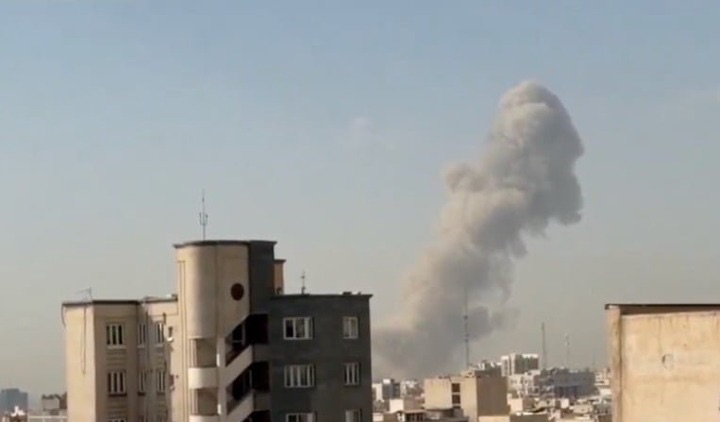
The world appears once again on edge. Tensions in the Middle East involving Iran, Israel and the United States have revived familiar questions about the limits of power, alliances, and survival in an increasingly volatile global order. Yet beyond the immediate theatre of conflict lies a deeper lesson; one that Africa, particularly the junta-led states of the Sahel, would do well to reflect upon.
Recent events in Syria and the mounting pressures faced by countries like Iran and Venezuela demonstrate a hard geopolitical truth: reliance on great powers for protection can often prove illusory. When crises escalate or strategic calculations change, even the most vocal allies may offer little more than rhetorical solidarity.
READ ALSO: 2027: Nigerian govt doesn’t want me to contest presidential election – Peter Obi (VIDEO)
This is a reality that resonates strongly in today’s Sahel, where Mali, Burkina Faso, and Niger, the core of the Alliance of Sahel States (AES), have pivoted sharply toward Moscow while distancing themselves from traditional Western partners and regional institutions such as ECOWAS.
There is nothing inherently wrong with sovereign nations pursuing partnerships with global powers. States must engage the world pragmatically to advance their interests. The danger arises when such alignments become ideological crusades that corner countries into rigid geopolitical camps. History suggests that when great-power rivalries intensify, smaller states risk becoming pawns rather than partners.
READ ALSO: WATCH: Prince William and Princess Catherine have greeted Nigerian President Bola Tinubu and First Lady Oluremi Tinubu at Windsor Castle as part of their state visit to the UK.
The experiences of Iran and Venezuela offer a cautionary example. Both countries have positioned themselves as defiant challengers to Western influence, often invoking anti-imperialist rhetoric to consolidate domestic authority. Yet when sanctions tightened and internal crises deepened, the much-touted backing of powerful allies such as Russia and China proved limited in practice. Diplomatic statements and symbolic gestures rarely translate into decisive rescue when the strategic costs are high.
About The Author




More Stories
President Tinubu Didn’t Choose The Nigeria He Inherited, But Chose To Confront Its Challenges For The Benefit Of Future Generations — Seyi Tinubu
2027: Tinubu Will Take Nigeria From Reforms To Prosperity If Re-Elected — First Lady Oluremi Tinubu
There is something happening in Igbo land today. Our people are no longer joining the Army, Police or any other security forces — Gov. Soludo laments