The Trump administration files a preemptive lawsuit to block certification of Alaska's Senate election results if incumbent Sen. Dan Sullivan loses, citing voter confusion over a similarly-named opponent.
The Trump administration has preemptively filed a lawsuit seeking to block certification of Alaska’s US Senate election if the Republican incumbent Sen. Dan Sullivan loses in the critical contest which could decide the balance of power in the Senate.
An Unprecedented Legal Move
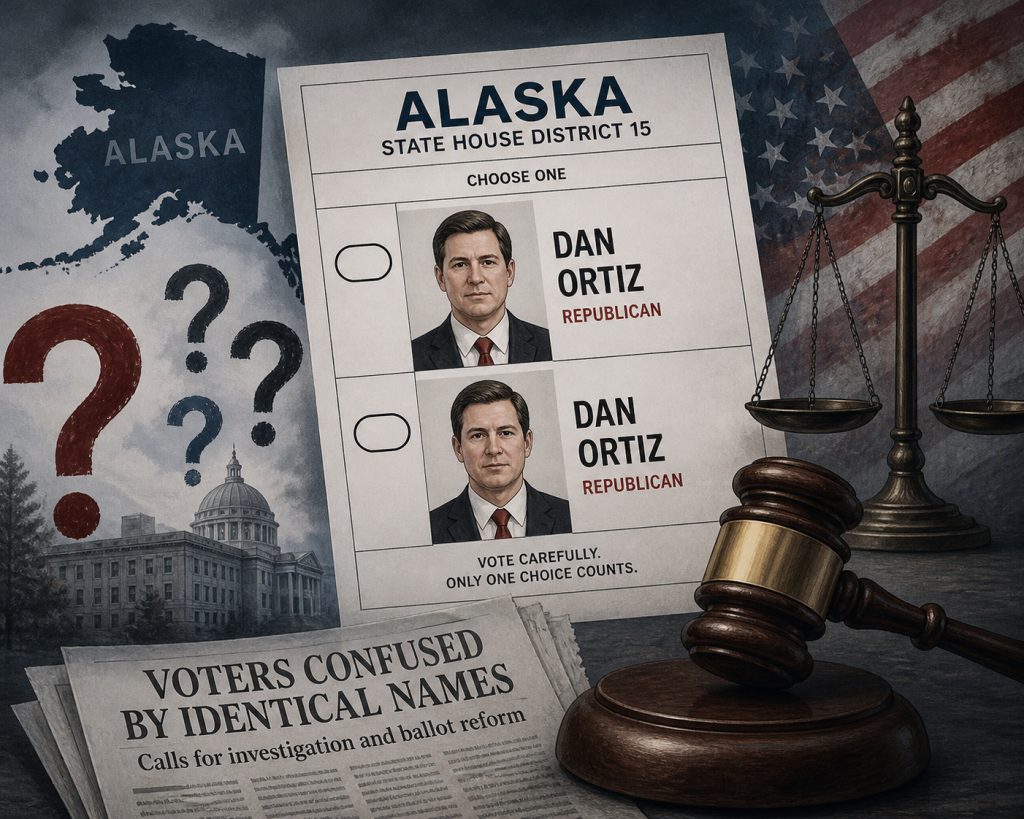
The lawsuit represents the latest attempt of the Trump Justice Department to insert itself in the administration of elections, running up against the minimal role the Constitution gives the Executive Branch. It alleges that a candidate named Daniel J. Sullivan could confuse voters and wants a court to potentially delay the certification of the election if the incumbent is defeated but would have won if “all votes cast for Daniel J. Sullivan” had “been cast instead for Senator Sullivan.”
President Donald Trump took credit for the legal challenge. “Well, I’m the one that said ‘do it,'” Trump told reporters in Florida on Friday when asked about the lawsuit. The president has regularly complained about the presence of the non-incumbent Sullivan on the ballot.
The “Two Sullivans” Controversy
The presence of the second Sullivan has brought additional controversy to the race and has already been a source of litigation, as Republicans have alleged he is running a spoiler candidacy designed to confuse voters.
Daniel J. Sullivan is a registered Republican, but state election officials listed him on the ballot without a party affiliation. Sen. Sullivan is labeled on the ballot as “Registered Republican” and “incumbent.”
In the primary, the incumbent Dan Sullivan won 68,726 votes. Daniel J. Sullivan won 4,107.
Election Law Experts Push Back
The lawsuit is based on a “strange and unusual” legal theory, said Derek Muller, an election law professor at Notre Dame Law School. It’s also unclear, he said, how a court could intervene in the way the DOJ proposes.
Vanita Gupta, an associate US attorney general during the Biden administration, said the lawsuit is “meritless.” “No federal statute authorizes the relief the DOJ seeks and the Alaska Supreme Court has already concluded that this candidate will stay on ballot,” Gupta said. “The Constitution gives Alaska, not the US Justice Department, the authority over who’s on its ballot, how its votes are counted, and the certification of the election.”
Alaska Officials Respond
Nate Adams, a spokesman for Sen. Sullivan, said the incumbent will “let the DOJ complaint run its course.” “Alaskans can tell the difference between a Democrat sideshow and Senator Sullivan’s strong record of delivering for Alaska, a record he’ll keep building on for the next six years,” Adams added.
Peltola spokesperson Harry Child called it “a despicable political threat to overturn an election.” “We will fight to ensure every single eligible voter in Alaska can make their voice heard and that no bureaucrat or politician from the Lower 48 can interfere with our lawful, secure elections,” he said.
Alaska’s Republican Sen. Lisa Murkowski, who is not up for reelection in November, sharply criticized the Trump administration’s lawsuit. “Alaskans don’t need any help voting for their preferred candidates, and the State of Alaska has already handled this by clearly distinguishing the candidates on this year’s ballot. The Department of Justice should never have filed this lawsuit,” Murkowski wrote in a post on X.
Ranked-Choice Voting Complicates Matters
Under Alaska’s voting system, the top four candidates from the primary, regardless of party, advance to the general election. On the general election ballot, voters have the option to rank the candidates in order of preference. If no candidate gets a majority of first choice votes, voters’ other rankings come into play.
DOJ alleges there is a possibility that voters intending to cast ballots for the incumbent might not rank him at all, or will rank Daniel J. Sullivan over him, resulting in the challenger’s votes going to the Democratic candidate if the race goes into additional rounds of tabulation.
However, experts note that a ranked-choice system could actually help reduce the impact of confusion — unlike in a traditional election where voters can only pick one candidate, an Alaska voter who wanted to vote for the incumbent could simply rank both Sullivans first and second.




More Stories
Liverpool’s Teen Sensation Rio Ngumoha Steals the Show in Champions League Thriller
DOJ Orders California Counties to Set Aside Ballots From Suspected Noncitizens
37-year-old Iranian Asylum Seeker Who Claimed He Had A Micropen+s In His Defence Against An Attempted R+pe Charge is Jailed For 11 Years In UK