
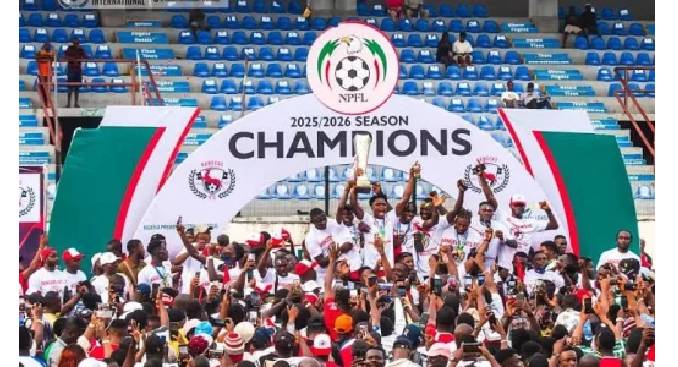
NPFL Champions to Earn ₦1 Billion as Officials Approve Massive Prize Money Increase and ₦2 Million Minimum Wage for Players
The champions of the next Nigeria Premier Football League (NPFL) season will receive a minimum prize money of ₦1 billion, marking a significant increase from the previous ₦200 million awarded to league winners.
The announcement was made on Tuesday in Abuja by Shehu Dikko, Chairman of the National Sports Commission (NSC), following a meeting with top officials of the Nigeria Football Federation (NFF).
During the meeting, stakeholders also agreed to introduce a minimum monthly wage of ₦2 million for players competing in the NPFL as part of efforts to improve welfare standards within the domestic league.
Dikko stated that the winners of the 2026/27 NPFL season will receive at least ₦1 billion, while the runners-up will earn ₦500 million and the third-placed team will receive ₦300 million, subject to official confirmation by league authorities.
According to him, the enhanced reward structure forms part of broader plans aimed at increasing the commercial appeal, professionalism, and competitiveness of the Nigerian top-flight league.
He expressed appreciation to NFF President Ibrahim Gusau and the federation’s General Secretary, Dr Mohammed Sanusi, describing their discussions as productive and crucial to the future of Nigerian football.
Dikko added that all parties involved share a common vision of advancing the game and ensuring long-term success across all levels of football in the country.
The NSC, NFF, and NPFL leadership also agreed that clubs must meet stricter licensing requirements, with emphasis placed on enforcing maximum standards rather than simply satisfying minimum obligations.
About The Author




More Stories
They Were More Aggressive Than Us, They Were Better Than Us — Super Eagles Coach, Eric Chelle Reacts to their 3-0 Loss to Guinea-Bissau
Unlocking Oshodi’s full potential: ADC House of Reps Candidate, Hon. Waheed Adetunji Akintunde pledges to discover and nurture the next generation of sporting talent
48-Year-Old Internationally Renowned Bodybuilder, Einar Méndez, D+es After Sudden Heart Att@ck During Workout at The Gym